Beauty of Joseon Relief Sun Review: Rice + Probiotics vs Aqua-Fresh, Ingredients and White Cast
One of the most searched sunscreens in the US, and one I like. Here is what is actually in it, which UV filters it uses, what the lab results say, and which version I would pick for which skin.
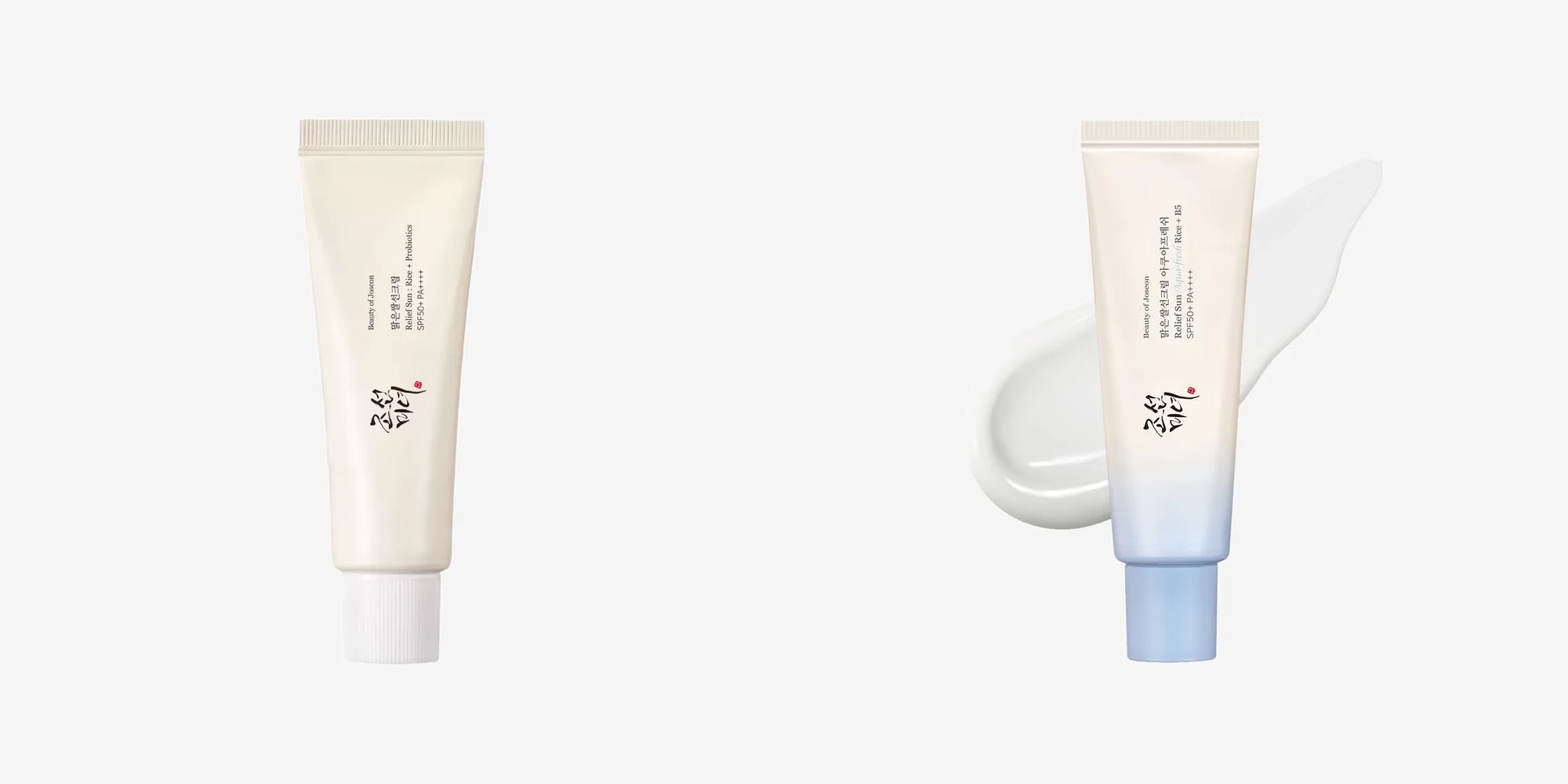
You cannot scroll K-beauty for five minutes without seeing this sunscreen, and I understand the hype: it is cheap, it feels creamy like a moisturizer and it leaves no white cast. I like it, and I like its lighter sibling, the Aqua-Fresh “Aqua Rice” version, too. But the reviews are not unanimous, so here is the full picture.
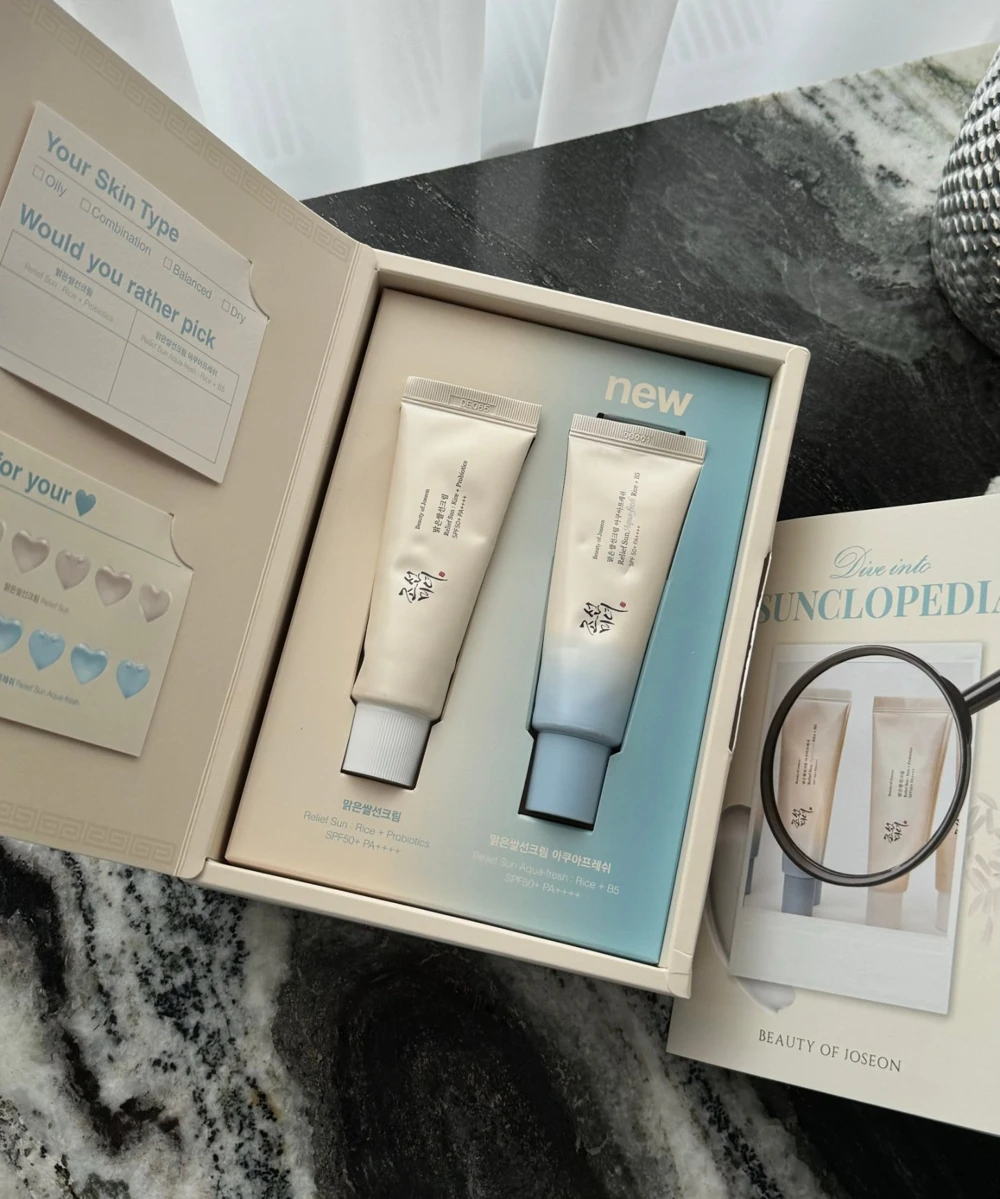
There are two versions: the original Relief Sun: Rice + Probiotics and Relief Sun Aqua-Fresh: Rice + B5. I went through the brand’s official pages and public reviews. I’m not a dermatologist, and this is not medical advice.
Key takeaways
- My take after using it since February 2025: I prefer Aqua Rice because it is lighter, while the original is richer and perfect for dry skin. Neither stings my eyes.
- It is a chemical sunscreen with SPF 50+ and PA++++, so it has no zinc or titanium white cast.
- The formula leads with 30% rice extract and fermented grain extracts, and the texture is creamy and moisturizing.
- The brand shows lab results of SPF 52.5 and SPF 63.1 from two labs, without sharing the number of test subjects.
- The original suits normal, dry and combination skin. For oily skin the brand points to Aqua-Fresh.
- Reviewers split on two things: it can feel too dewy on very oily skin, and it can sting the eyes for some people.
My experience: using it since February 2025
I have normal skin, and Beauty of Joseon has been one of my sunscreens since February 2025. I like the texture, the ingredients, the protection and how easy it is to apply. Neither version stings my eyes, and my skin looks a little shiny with them on.
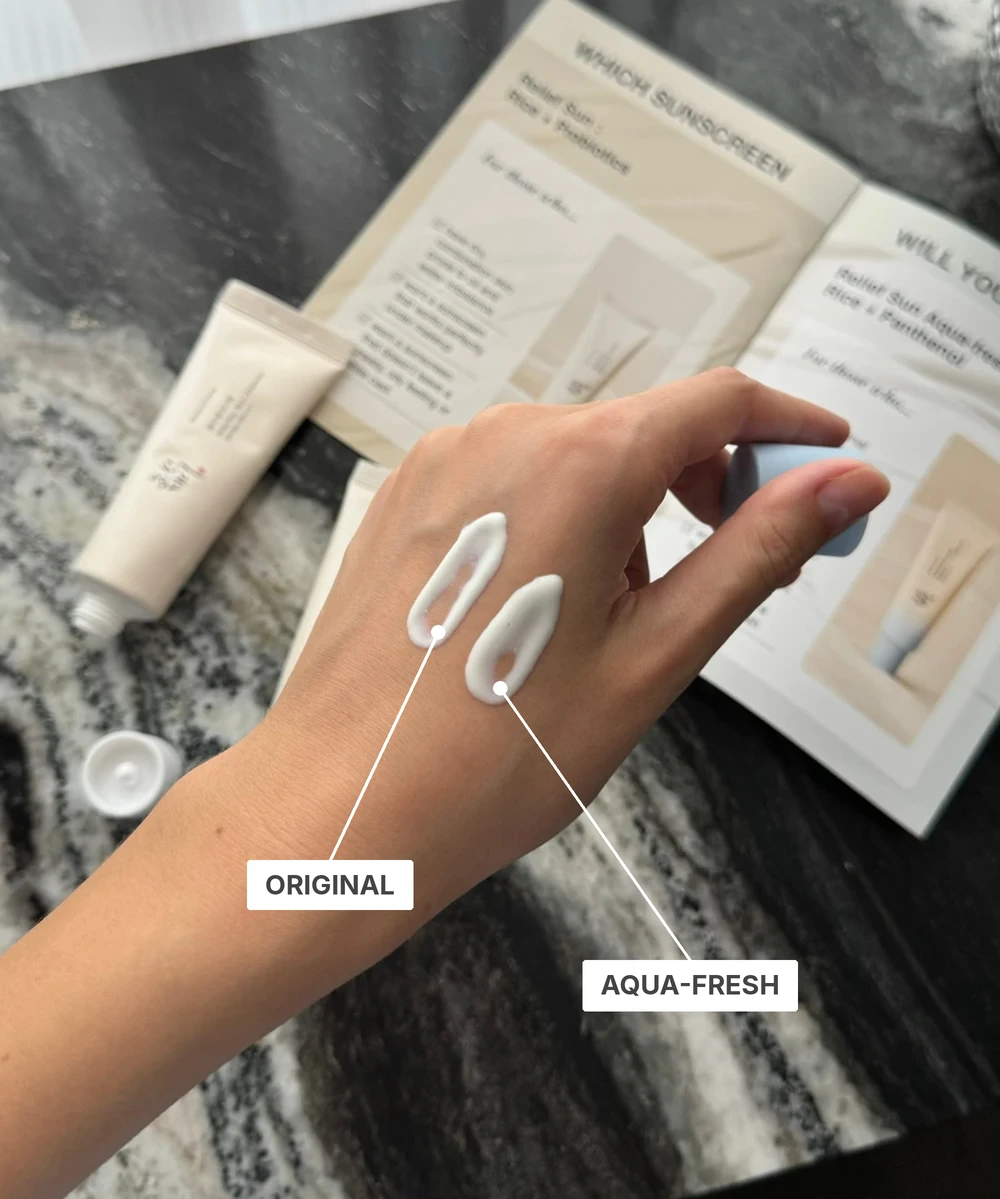
I prefer the Aqua Rice version because it is lighter. Its texture is closer to a milk lotion than a cream. The original is greasier and you feel more of it on the skin, which is exactly why it is perfect for dry skin. If you know my Round Lab Birch Juice review, here is the easiest comparison: the original feels similar to the Birch Juice sunscreen, and Aqua Rice feels similar to the Birch Juice sun serum. I would recommend it to everyone, and I would buy it again.
Beauty of Joseon Relief Sun at a glance
Relief Sun: Rice + Probiotics, at a glance
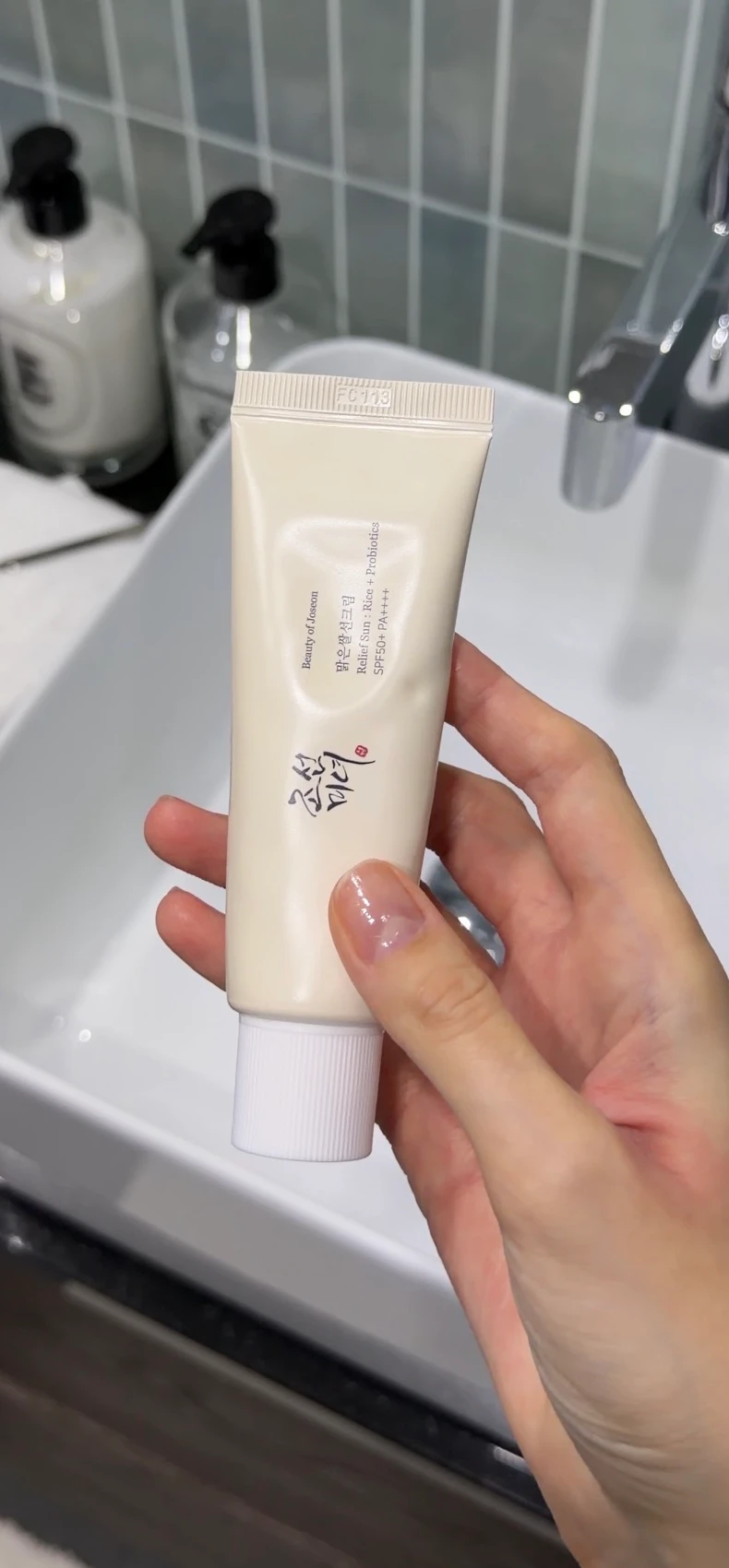
Source: Beauty of Joseon official product page. Prices change, so check the page before you buy.
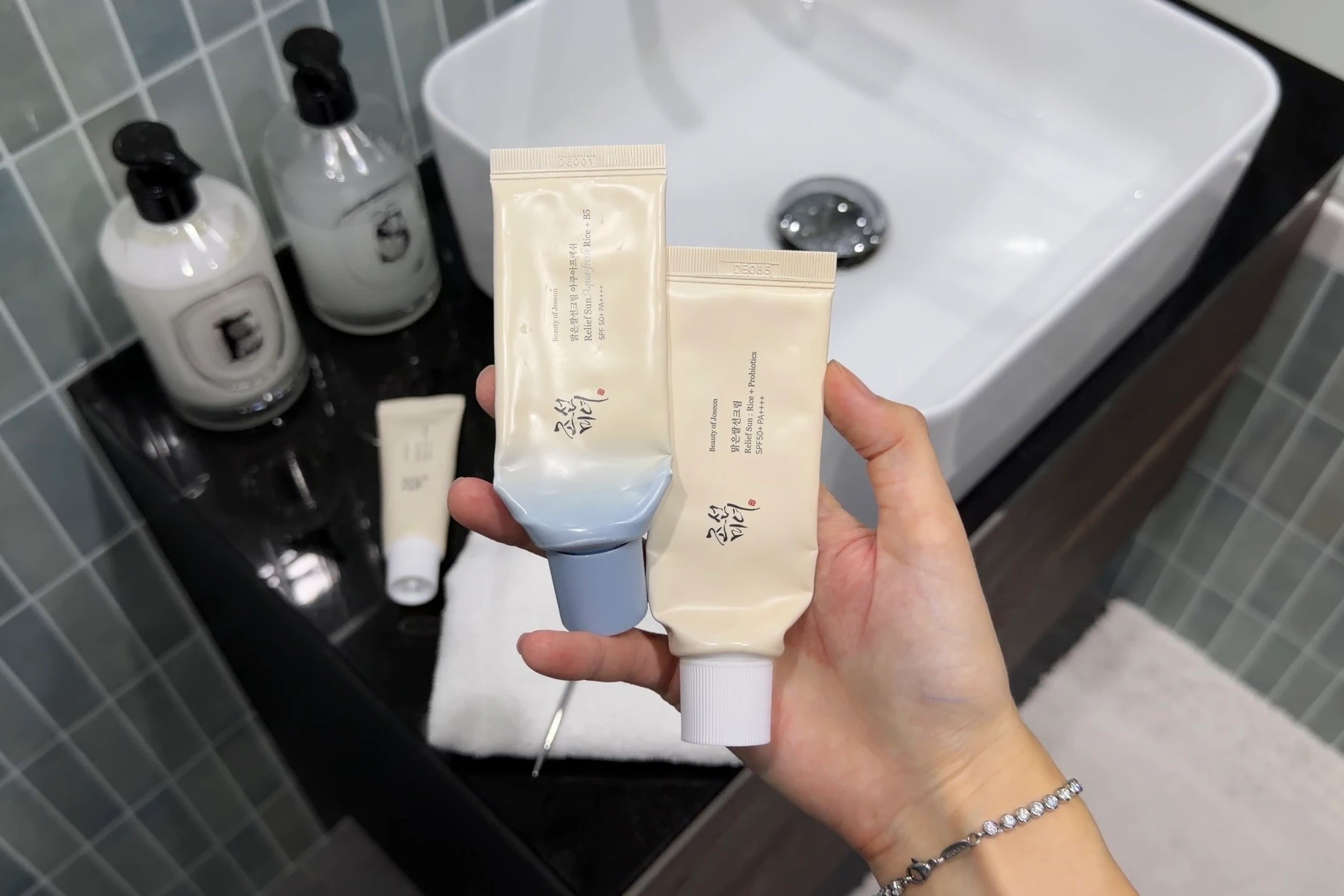
What’s inside: the full ingredient list
I took the list from the brand’s official page and not from a retailer. In order, it reads:
Show the full ingredient list
Water, Oryza Sativa (Rice) Extract (30%), Dibutyl Adipate, Propanediol, Diethylamino Hydroxybenzoyl Hexyl Benzoate, Polymethylsilsesquioxane, Ethylhexyl Triazone, Niacinamide, Methylene Bis-benzotriazolyl Tetramethylbutylphenol, Coco-caprylate/Caprate, Caprylyl Methicone, Diethylhexyl Butamido Triazone, Glycerin, Butylene Glycol, Oryza Sativa (Rice) Germ Extract, Camellia Sinensis Leaf Extract, Lactobacillus/Pumpkin Ferment Extract, Bacillus/Soybean Ferment Extract, Saccharum Officinarum (Sugarcane) Extract, Macrocystis Pyrifera (Kelp) Extract, Cocos Nucifera (Coconut) Fruit Extract, Panax Ginseng Root Extract, Camellia Sinensis Leaf Extract, Monascus/Rice Ferment, Pentylene Glycol, Behenyl Alcohol, Poly C10-30 Alkyl Acrylate, Polyglyceryl-3 Methylglucose Distearate, Decyl Glucoside, Tromethamine, Carbomer, Acrylates/C10-30 Alkyl Acrylate Crosspolymer, 1,2-Hexanediol, Sodium Stearoyl Glutamate, Polyacrylate Crosspolymer-6, Ethylhexylglycerin, Adenosine, Xanthan Gum, Tocopherol, Lactobacillus/Rice Ferment, Aspergillus Ferment, Saccharomyces/Rice Ferment Filtrate.
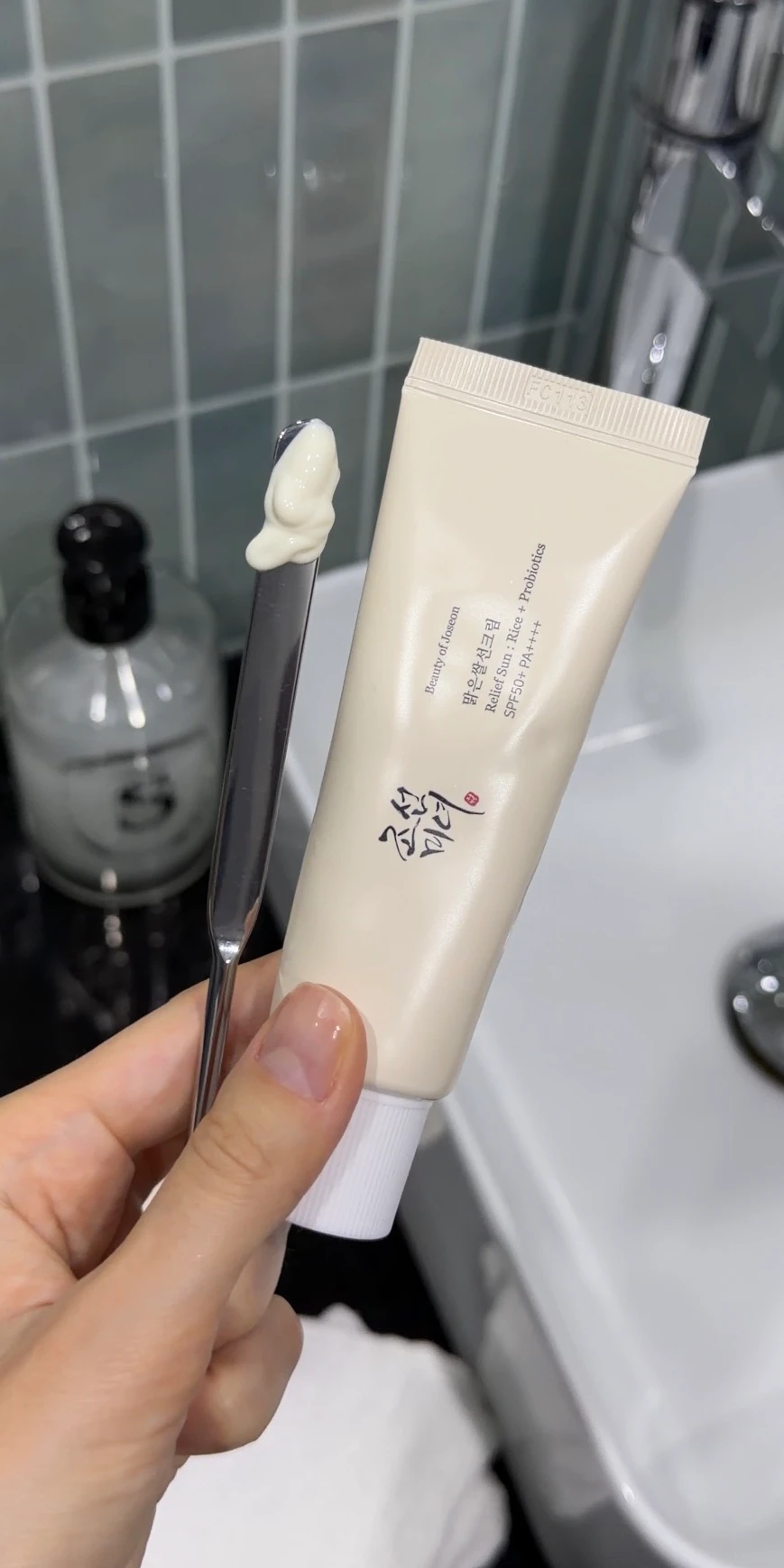
The brand builds the formula around rice extract and fermented grains, with four chemical UV filters doing the sun protection.
Rice extract (30%)
The second ingredient. The brand describes it as rich in vitamins B, C and E, amino acids and minerals, for moisture and antioxidant support.
Fermented grain extracts
Pumpkin, soybean and rice ferments that the brand says soothe, calm and hydrate.
Four UV filters
Ethylhexyl triazone, diethylamino hydroxybenzoyl hexyl benzoate, diethylhexyl butamido triazone and methylene bis-benzotriazolyl tetramethylbutylphenol give the SPF 50+ PA++++.
also made with niacinamide, glycerin, adenosine, tocopherol, green tea, ginseng, kelp and coconut extracts
Worth checking
The formula contains plant and ferment extracts, so patch-test if your skin is reactive. Chemical filters can sting if they get into the eyes, so keep it a little away from the lash line.
Which skin concerns it suits
| Concern | What to expect |
|---|---|
| Daily sun protection | SPF 50+ PA++++ with lab results above 50 in both labs the brand shows. |
| White cast | The brand says none, and it uses chemical filters. |
| Dry or dehydrated skin | Creamy and moisturizing; the brand says you can layer it over a moisturizer. |
| Oily or acne-prone skin | Some find the original too dewy. The brand points oily skin to Aqua-Fresh. |
| Sensitive skin | Mixed. The brand reports a soothing test for Aqua-Fresh, while some reviewers report stinging or breakouts. |
| Under makeup | Reviewers describe it as layering well, though the dewy finish may need a setting step for some. |
This table summarizes the brand’s claims and public reviews, not a clinical test.
Chemical or mineral, and why white cast matters
Sunscreens work with either mineral filters (zinc oxide, titanium dioxide) or chemical filters. Mineral ones sit on the skin and can leave a pale layer, especially on deeper skin tones. Chemical ones absorb into a thin, clear film, so there is usually no white cast. That is the main reason Relief Sun is popular, and it is also why some people notice more stinging around the eyes. The FDA says what matters most is choosing a broad-spectrum sunscreen with SPF 15 or higher, using enough, and reapplying about every two hours.
Does it work? SPF, PA and the brand’s lab results
The brand’s page shows two lab tests for the original. Lab 1 in Korea found SPF 52.5 ± 5.8 and a UVA protection factor of 16.1 (PA++++). Lab 2 in Spain found SPF 63.1 ± 0.6 and a UVA protection factor of 19 (PA++++). Both are above the labelled SPF 50. The page does not say how many people were tested, so I treat the numbers as supportive, not as an independent verdict. In real life, results depend mostly on how much you apply: the brand says two full fingers on the face and neck.
Rice + Probiotics vs Aqua-Fresh
If you are choosing between the two, this is how they differ based on the brand’s pages. The Aqua-Fresh details come from the brand’s EU/UK page, and filters may differ by market, so check the label of the one you buy.
| Rice + Probiotics (original) | Aqua-Fresh: Rice + B5 | |
|---|---|---|
| Texture | Creamy, moisturizing | Light fluid |
| Key ingredients | 30% rice extract, fermented grains | Rice seed water, panthenol (B5) |
| Protection | SPF 50+ PA++++ | SPF 50+ PA++++ |
| UV filters | Four (listed above) | Five, including Mexoryl SX and Tinosorb S (EU/UK page) |
| On my skin (normal) | Greasier, you feel it more. Perfect for dry skin | Lighter, closer to a milk lotion than a cream |
| Feels most like | Round Lab Birch Juice sunscreen | Round Lab Birch Juice sun serum |
| Brand says it suits | Normal, dry, dehydrated, combination | Oily, combination |
| Reapply | Every 2 to 3 hours | Every 2 hours |
Why people love it, and why some do not
I read through what shoppers say, and could not watch every video, so this is the overall picture from Google’s results and the brand’s page, not a quote from any one person.
- The love. Comfortable, moisturizing, no white cast, a dewy finish that layers under makeup. The brand’s page shows 4.9 out of 5 from over 3,500 reviews, which is the brand’s own display.
- The “it depends.” Very oily skin can find the original too dewy, and some people say it stings the eyes.
- The doubts. Reddit threads on r/SkincareAddiction and r/SkinbarrierLovers include negative experiences, so I would not call it perfect for everyone.
How I would use it
- Last step of the morning routine, after moisturizer.
- Two full fingers for face and neck, as the brand says. Don’t skimp, because the SPF number assumes a generous layer.
- Reapply every 2 to 3 hours when you are outside.
- Dry skin: layer it over a moisturizer. Oily skin: skip extra moisturizer, or choose Aqua-Fresh.
If you want to compare it with other Korean sunscreens, see my Round Lab Birch Juice review and the Round Lab Camellia sun serum review.
My verdict
I use and prefer Aqua Rice for its lighter, milk-like texture. I’d pick the original if you want an affordable, creamy daily sunscreen with no white cast and a dewy finish. I’d pick Aqua-Fresh if your skin is oily or combination and the original feels too rich. I’d look elsewhere if chemical filters sting your eyes or you can only use mineral sunscreen, and I’d patch-test if you react to plant or ferment extracts.
The original is the rich one, Aqua Rice is the light one, and Aqua Rice is my pick.
I’m not a doctor. If you are pregnant or breastfeeding, or have a skin condition, ask your doctor or dermatologist before adding a new product. See a doctor for any spot that is new, changing or bleeding.
Beauty of Joseon Relief Sun: common questions
What is Beauty of Joseon Relief Sun: Rice + Probiotics?
It is a lightweight, creamy chemical sunscreen with SPF 50+ and PA++++. The brand says it contains 30% rice extract plus fermented grain extracts, and that it leaves skin dewy with no white cast. It comes in a 50 ml tube and was $18.00 on the brand’s US store when I checked in October 2026.
Is Beauty of Joseon sunscreen chemical or mineral?
Chemical. The brand lists four UV filters: ethylhexyl triazone, diethylamino hydroxybenzoyl hexyl benzoate, diethylhexyl butamido triazone and methylene bis-benzotriazolyl tetramethylbutylphenol. None of them is zinc oxide or titanium dioxide, which is why it does not leave a white cast.
What are the ingredients in Beauty of Joseon Relief Sun?
The brand’s list starts with water, rice extract (30%), dibutyl adipate and propanediol, followed by the UV filters. It also contains niacinamide, glycerin, adenosine, tocopherol, green tea, ginseng and several ferments. The full list is in the article.
Does Beauty of Joseon Relief Sun leave a white cast?
The brand says no, and reviewers largely agree because the filters are chemical. Because it is a chemical sunscreen, it should absorb into the skin, although it can look dewy or slightly glossy on some skin types.
Does Beauty of Joseon Relief Sun really have SPF 50?
The brand shows two independent lab results on its page: SPF 52.5 in a Korean lab and SPF 63.1 in a Spanish lab, with PA++++ in both. The page does not give the number of test subjects. As with any sunscreen, real-life protection depends on applying enough and reapplying.
How much should I apply and how often should I reapply?
The brand says to use two full fingers’ worth on the face and neck as the last step of your morning routine, and to reapply every 2 to 3 hours. The FDA also advises reapplying at least every two hours when you are outdoors.
Is Beauty of Joseon sunscreen good for oily or acne-prone skin?
The brand says the original suits normal, dry, dehydrated and combination skin, and points oily skin to its Aqua-Fresh formula. Some reviewers find the original too dewy for very oily skin, and some people report breakouts, so patch-test and introduce it slowly.
What is the difference between Relief Sun Rice + Probiotics and Aqua-Fresh Rice + B5?
The original is creamier and more moisturizing with 30% rice extract, aimed at normal to dry skin. Aqua-Fresh is a lighter fluid with rice seed water and panthenol (vitamin B5), aimed at oily and combination skin. Their UV filters differ, as the comparison table shows.
Does Beauty of Joseon sunscreen sting the eyes?
It does not sting my eyes, but some reviewers say it can, which is common with chemical sunscreens, especially if you sweat or apply it close to the eyes. If it happens to you, keep it a little further from the lash line and try a different formula if it continues.
Is Beauty of Joseon Relief Sun safe during pregnancy?
The brand says pregnant women can use it but that skin may become more sensitive, and it recommends consulting a doctor before adding new products. This article is not medical advice, so ask your doctor or dermatologist.
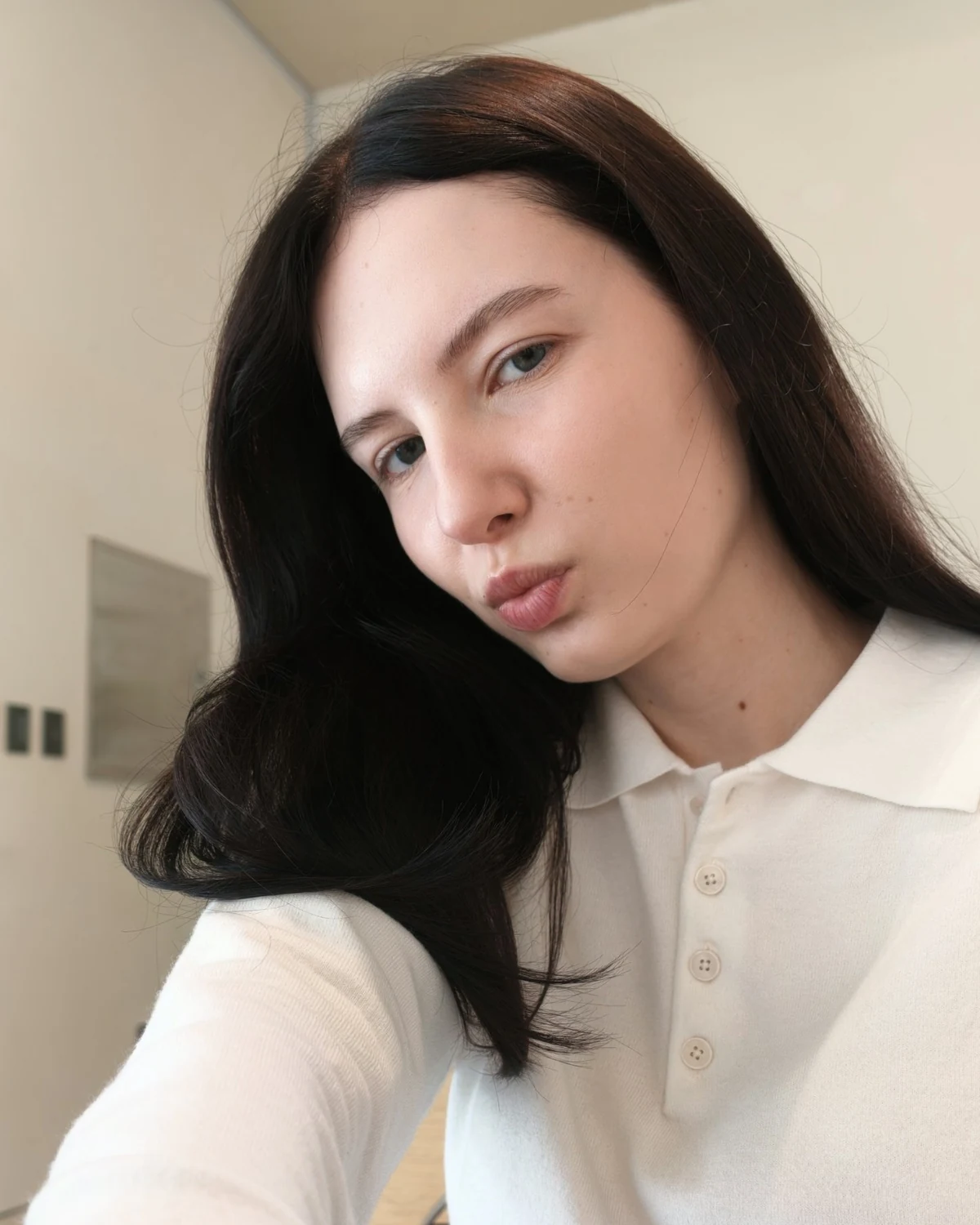
Hi, I’m Anna. I share honest skincare reviews, simple routines and gut-friendly habits from my own life, on Instagram, on YouTube and here. I am not a doctor or a dietitian: I read the research and official sources, link them at the end of each note, and keep my claims careful. More about me and how I write these notes.
Want more notes like this?
One honest recommendation in your inbox every Sunday: skin tips, simple food ideas and the picks I actually use.
No spam, unsubscribe any time.Sources
- Relief Sun: Rice + Probiotics (SPF50+ PA++++), Beauty of Joseon official US store (ingredients, filters, lab results, directions, price).
- Relief Sun Aqua-Fresh: Rice + B5, Beauty of Joseon official store (filters, texture, brand tests).
- Sunscreen: How to help protect your skin from the sun, U.S. Food and Drug Administration.
Prices and brand claims checked in October 2026 and can change. Opinions of other shoppers are summarized as seen in public search results.
Keep reading
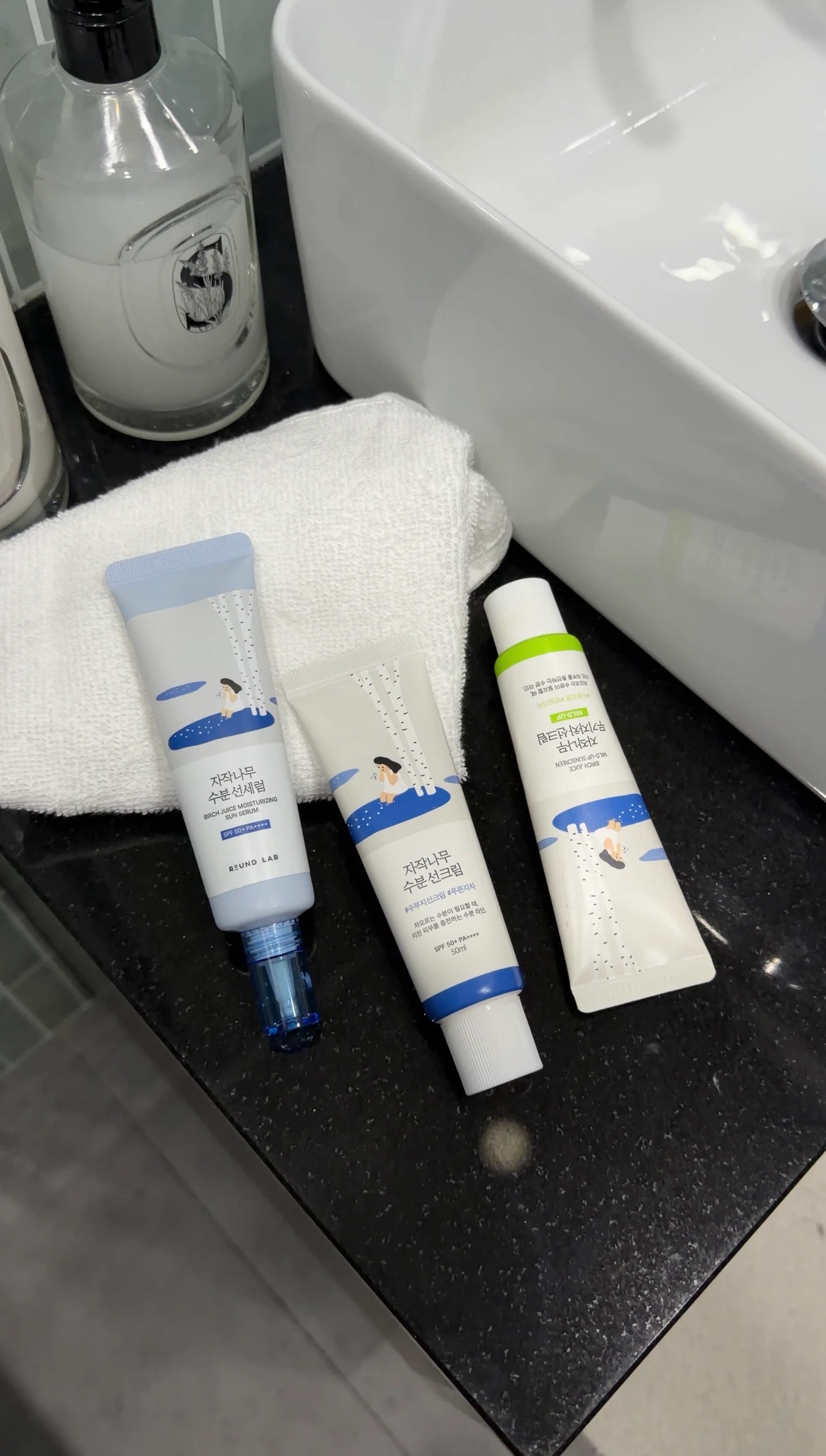
Round Lab Birch Juice sunscreen: all four versions compared
Sunscreen, sun serum, Mild-Up and the stick: texture, white cast, under makeup, and which one to buy.
- Product facts
- Ingredients
- Skin concerns
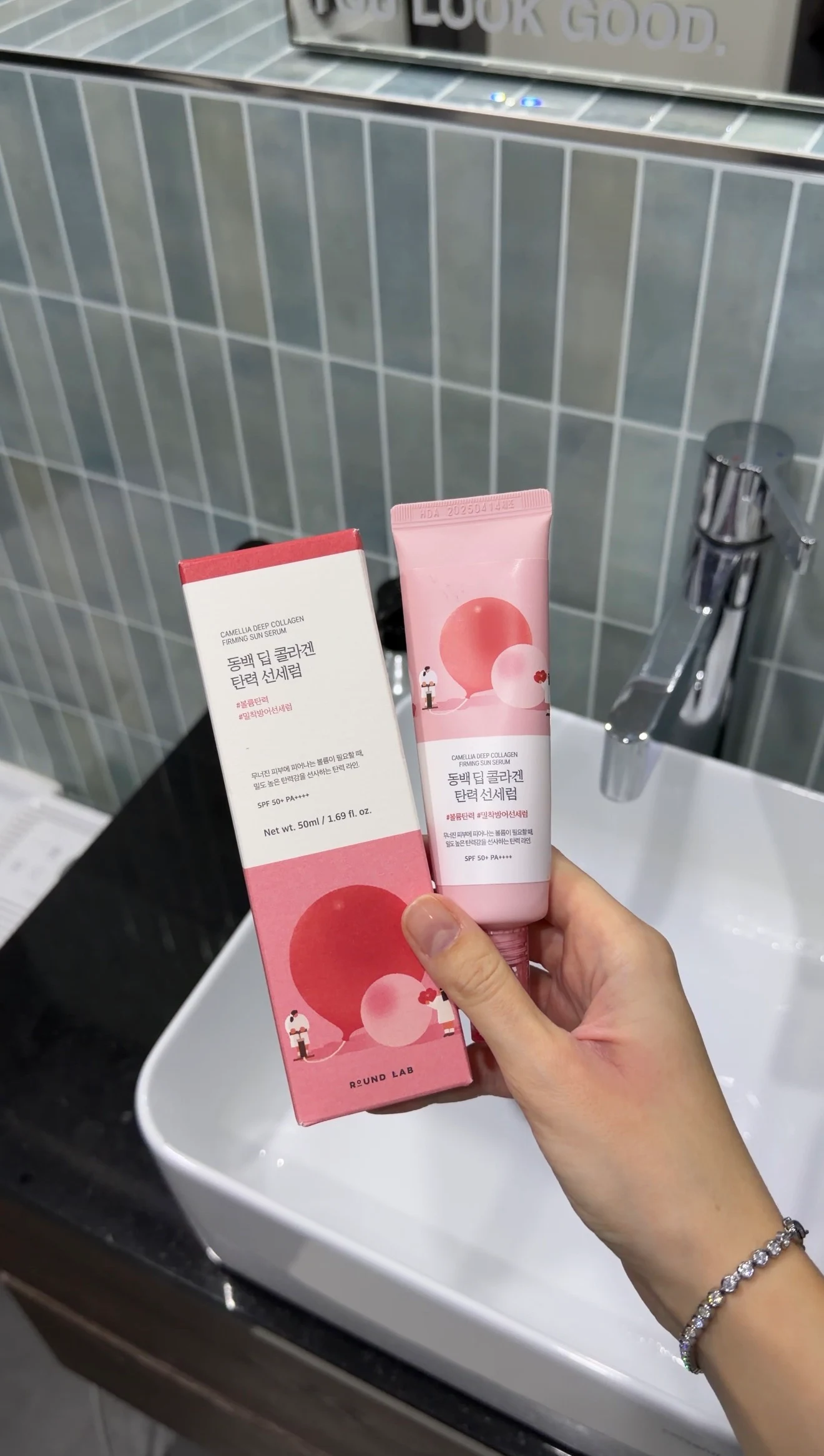
Round Lab Camellia Deep Collagen sun serum
SPF 50+ with collagen and retinoid: what they really do, the texture and how to use it.
- Product facts
- Ingredients
- Skin concerns
Axis-Y Dark Spot Glow Serum
What 5% niacinamide can and cannot do, what TikTok and Reddit say, and how to use it.
- Product facts
- Ingredients
- Skin concerns
Tell me what your skin feels like, and I will show you what to look for and what to skip.
Open the skin guide