Best Foods for Skin: My Grocery List for Glowing Skin
Glow from within starts at the grocery store. This is part 5 of my skin barrier and gut health series: the foods I put in my basket, grouped by what they do for the skin, from UV protection and cell turnover to collagen, redness and digestion, with real numbers and honest limits.
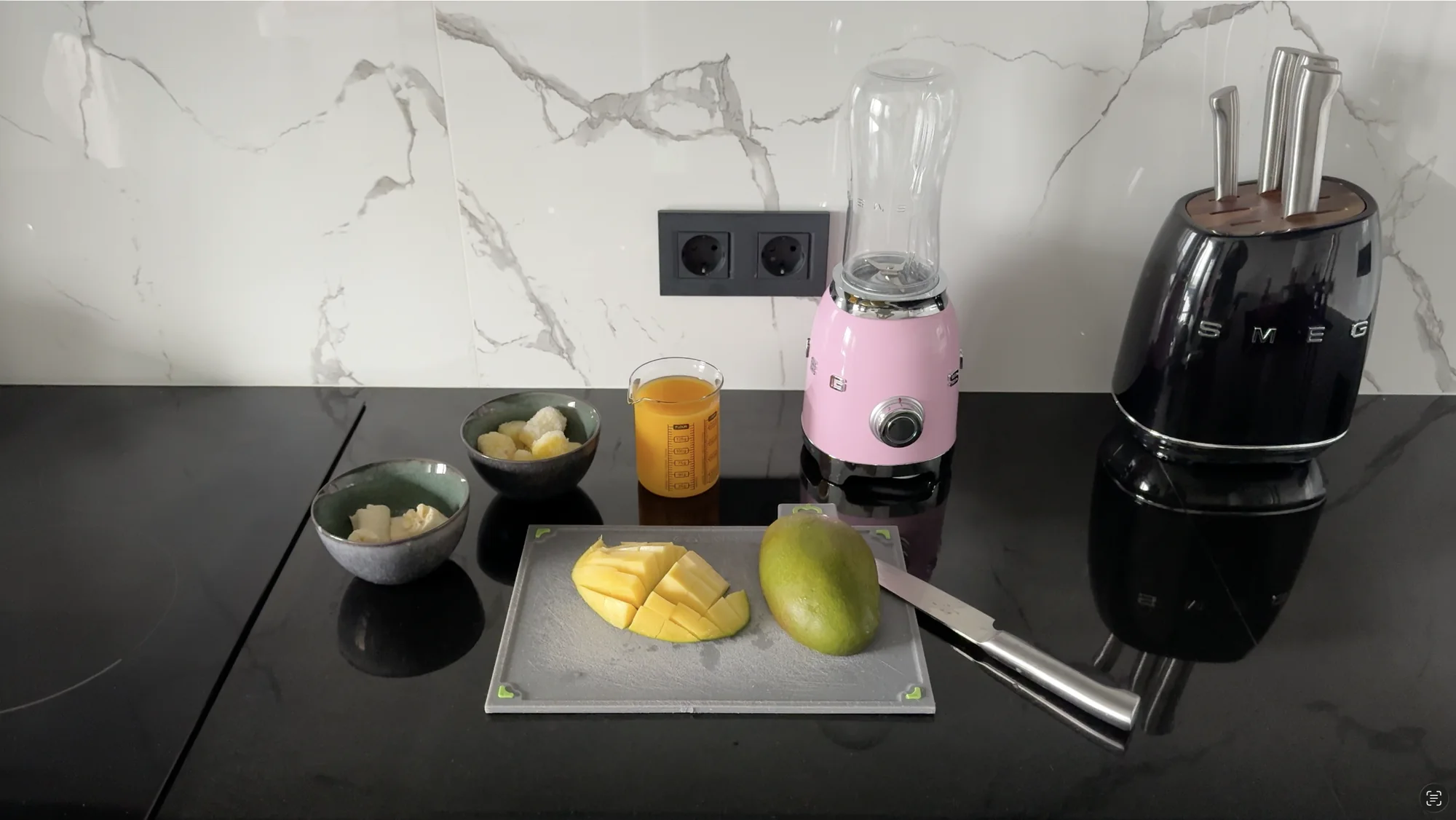
“What are the best foods for skin?” is a hard question to answer with one food, so I think about groceries in groups. Some foods support the gut, some help skin renew itself, some are full of the co-factors collagen needs, and some are simply calming. When my basket has a bit of each, I feel I have covered my bases.
This is general information from my own reading and routine, not medical advice. Food supports your skin; it does not replace sunscreen, skincare or medical treatment.
Key takeaways
- Leafy greens like spinach support the gut-skin connection.
- Orange vegetables, cooked tomatoes and dark berries bring carotenoids and antioxidants that support the skin against everyday stress.
- Matcha, pumpkin seeds, walnuts and flaxseeds are my calming, barrier-friendly picks.
- Kiwi, red bell peppers and citrus give vitamin C, which the body needs to make collagen.
- Broccoli sprouts, cruciferous vegetables, garlic and onions support digestion and the gut.
The gut-skin connection: why I start with greens
I explained this in part 1. The short version of how your gut shows up on your face:
- Direct line. Your gut and skin constantly communicate through the immune system.
- Inflammation. An unbalanced gut can go along with redness, breakouts and skin reactivity.
- Nutrient gate. Your skin can only use the nutrients your gut actually absorbs.
- Stress link. Gut stress may weaken your outer skin barrier.
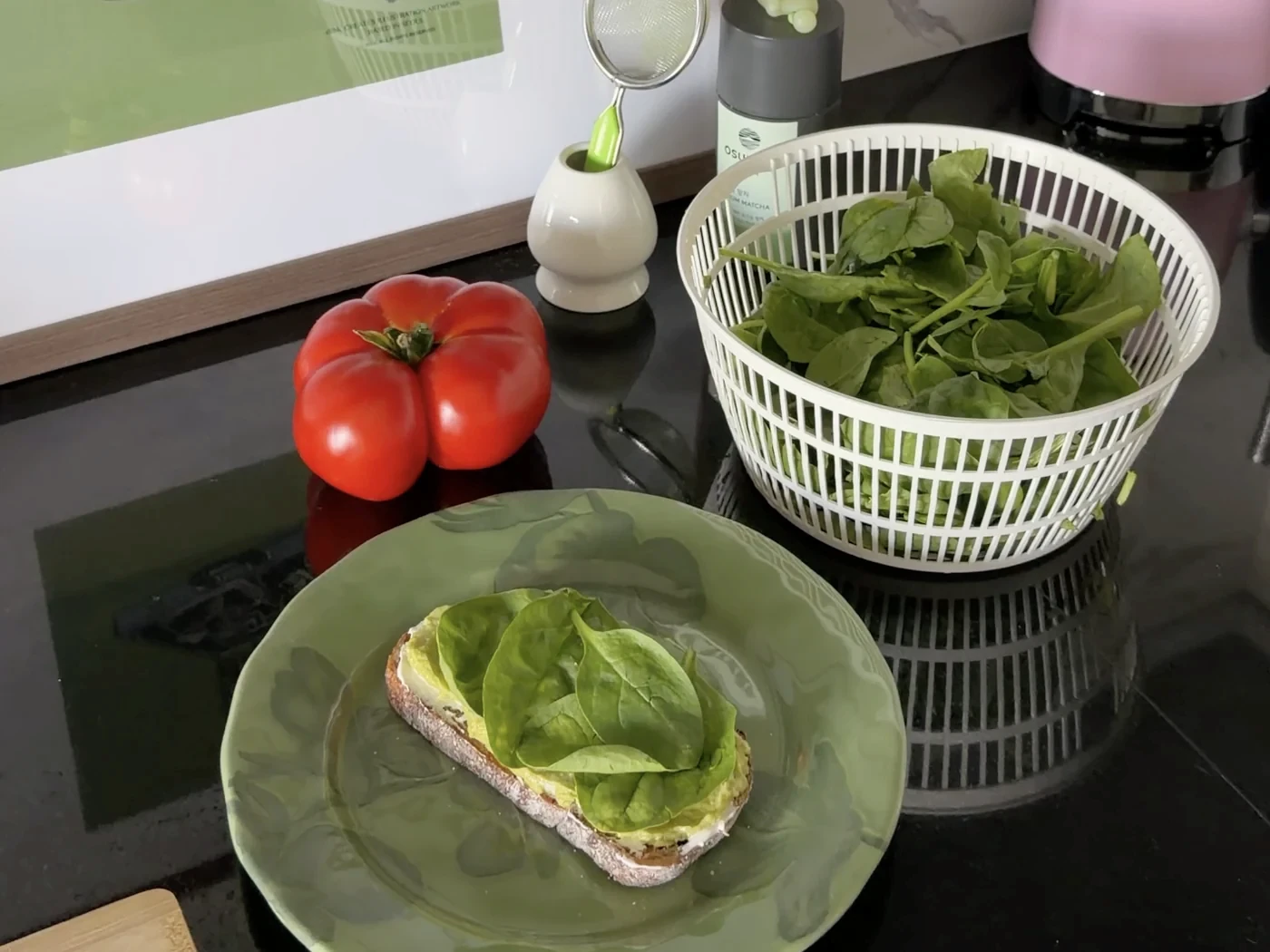
That is why a bag of spinach is the first thing I grab. It is an easy way to add fibre, folate and plant compounds to a smoothie, an omelette or a salad.
Best foods for UV protection and cell turnover
These foods are rich in carotenoids and fat-soluble antioxidants:
| Food | What I like about it |
|---|---|
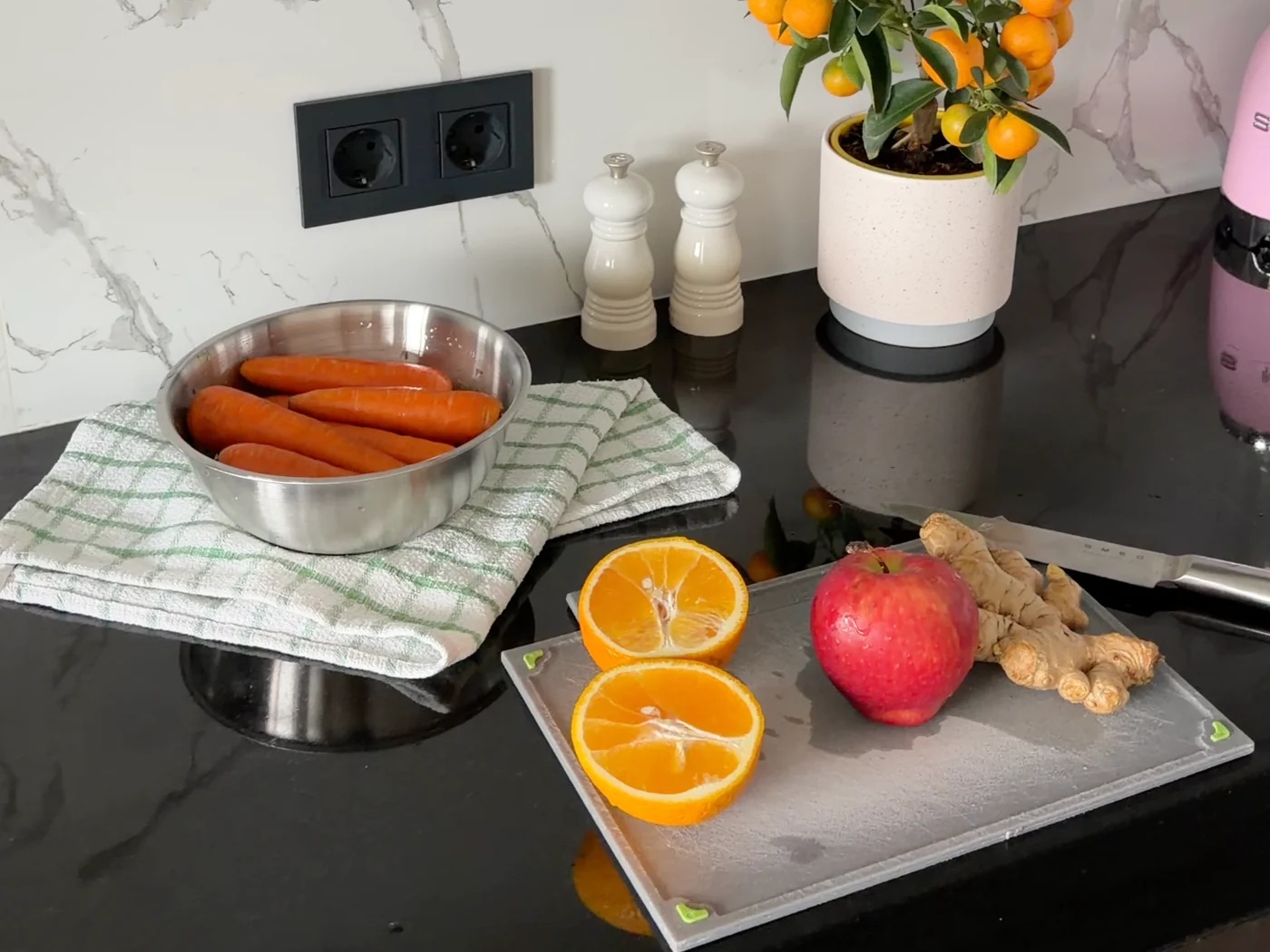
| Sweet potatoes and carrots | High in beta-carotene, which the body converts to vitamin A. Vitamin A supports natural skin cell turnover. Adult women need about 700 mcg RAE a day. |
| Cooked tomatoes | Packed with lycopene, a carotenoid that is easier to absorb when tomatoes are cooked and eaten with oil. |
| Dark berries, pomegranate | Rich in ellagic acid and anthocyanins, plant antioxidants that help protect collagen fibres from environmental stress. |
Reviews of carotenoids and sun protection suggest that eating carotenoid-rich foods consistently for a few months may modestly increase the skin’s resistance to sunburn. The effect is small and takes time.
Food-based antioxidants may add a little support against UV damage, but they do not replace sunscreen. SPF stays the first step of my daytime routine. Also, very high beta-carotene intake can tint the skin orange (harmless), and high-dose beta-carotene supplements are linked with higher lung cancer risk in smokers, so get it from food.
Best foods for redness and oil balance
These are rich in polyphenols and barrier-friendly minerals:
| Food | What I like about it |
|---|---|
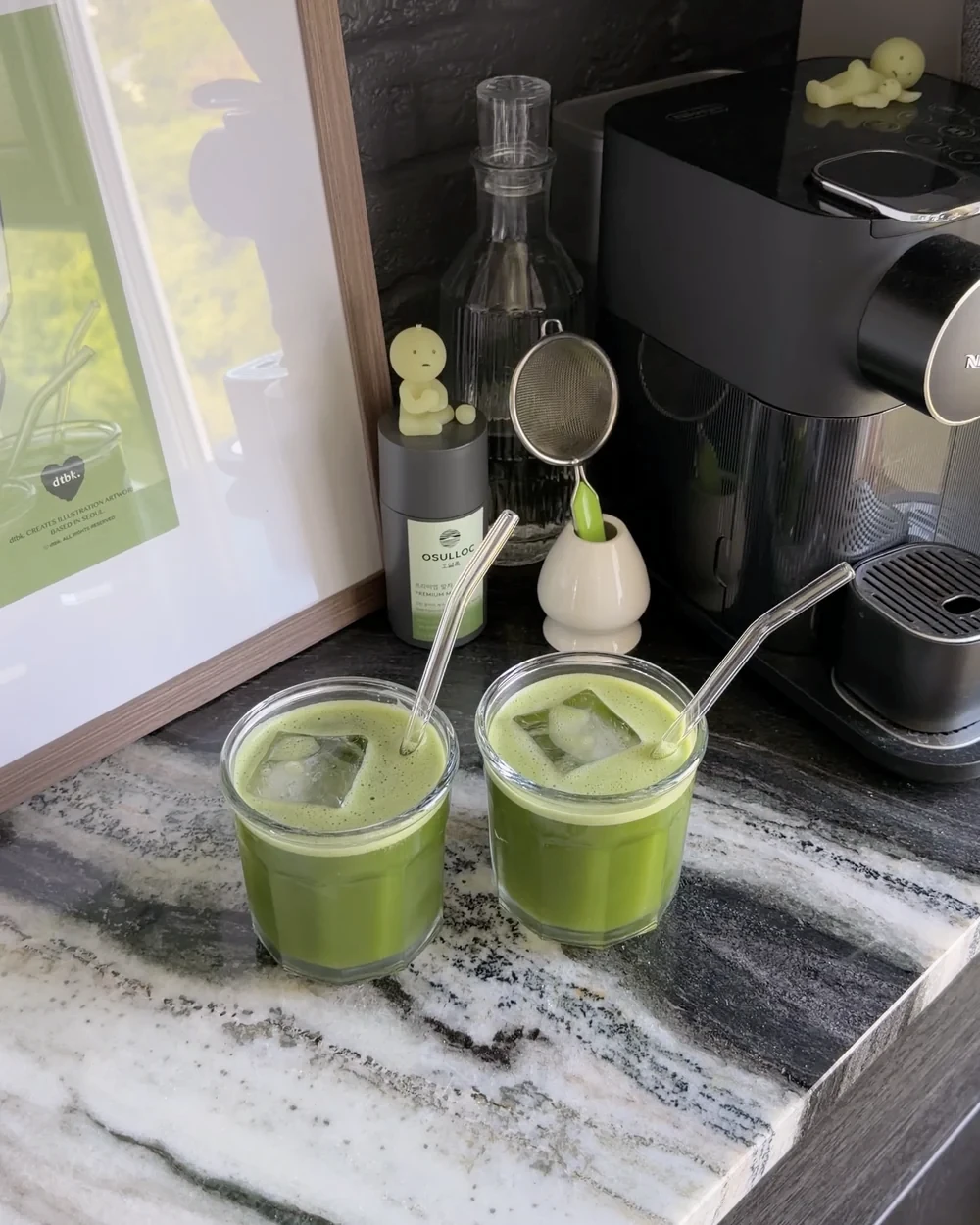
| Matcha, green tea | High in EGCG, a polyphenol studied for calming and oil-regulating effects on skin, mostly in small trials and with topical or concentrated extracts. |
| Pumpkin seeds | A top plant source of zinc and magnesium, which support skin repair and a calmer response to breakouts. |
| Walnuts, flaxseeds | Provide plant-based ALA (an omega-3) that supports healthy cell membranes and moisture. |
Zinc and magnesium have limits worth knowing: the adult upper limit for zinc is 40 mg a day from all sources, and for magnesium from supplements 350 mg a day, according to the US National Institutes of Health. Seeds as food are not a concern, but I go deeper on supplements in my food and supplements guide. Tea can reduce iron absorption, so I drink it between meals.
Best foods for collagen and brightening
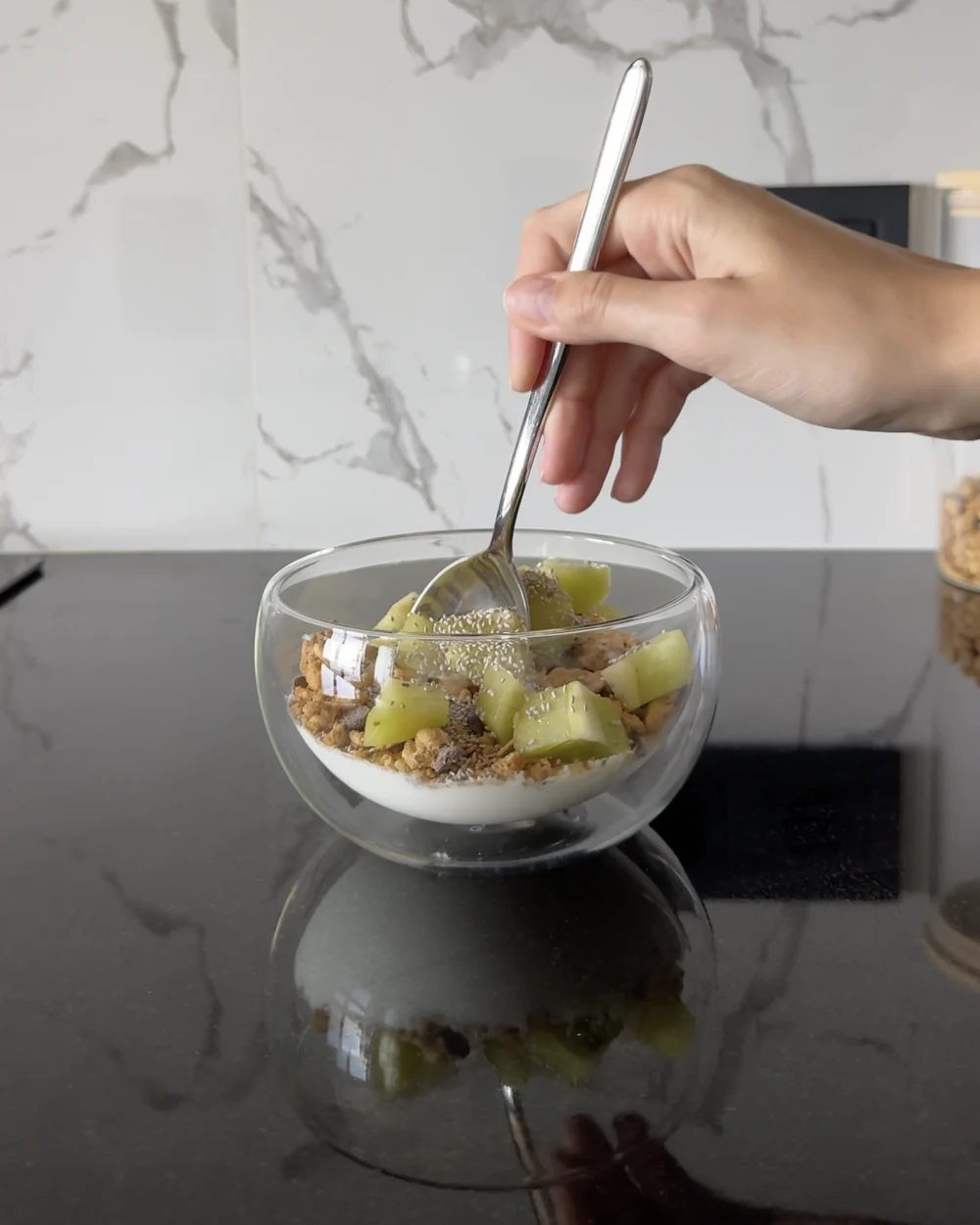
Collagen needs vitamin C as a co-factor, so I make sure it is on my list every week. Here is how some popular sources compare, using approximate USDA values per 100 g:
| Food | Vitamin C (about, per 100 g) |
|---|---|
| Red bell pepper | around 130 mg |
| Kiwi | around 90 mg |
| Orange | around 50 mg |
| Strawberries | around 60 mg |
Adult women need 75 mg a day (more for smokers), so one kiwi or half a red pepper already covers a large share. Heat and long storage reduce vitamin C, so I like these raw or lightly cooked. Citrus peel and lemon water also bring bioflavonoids, plant compounds that support small blood vessels, though there is little direct evidence for redness.

Best foods for hormonal and digestive support
| Food | What I like about it |
|---|---|
| Broccoli sprouts, cruciferous vegetables | Contain sulforaphane and DIM, compounds studied for their role in the liver’s normal processing of hormones and in the skin’s own defence systems. Skin studies are small, often with extracts, so I eat them for general health. |
| Garlic, onions | Rich in prebiotic fibres and sulfur compounds that feed beneficial gut bacteria and supply building blocks for glutathione, one of the body’s main antioxidants. |
I do not believe in “detoxing” with food. Your liver and gut already do that job, and I simply like to give them good building blocks. If garlic, onions or cruciferous vegetables upset your digestion, start small, because they can cause gas and bloating.
How I shop and eat them
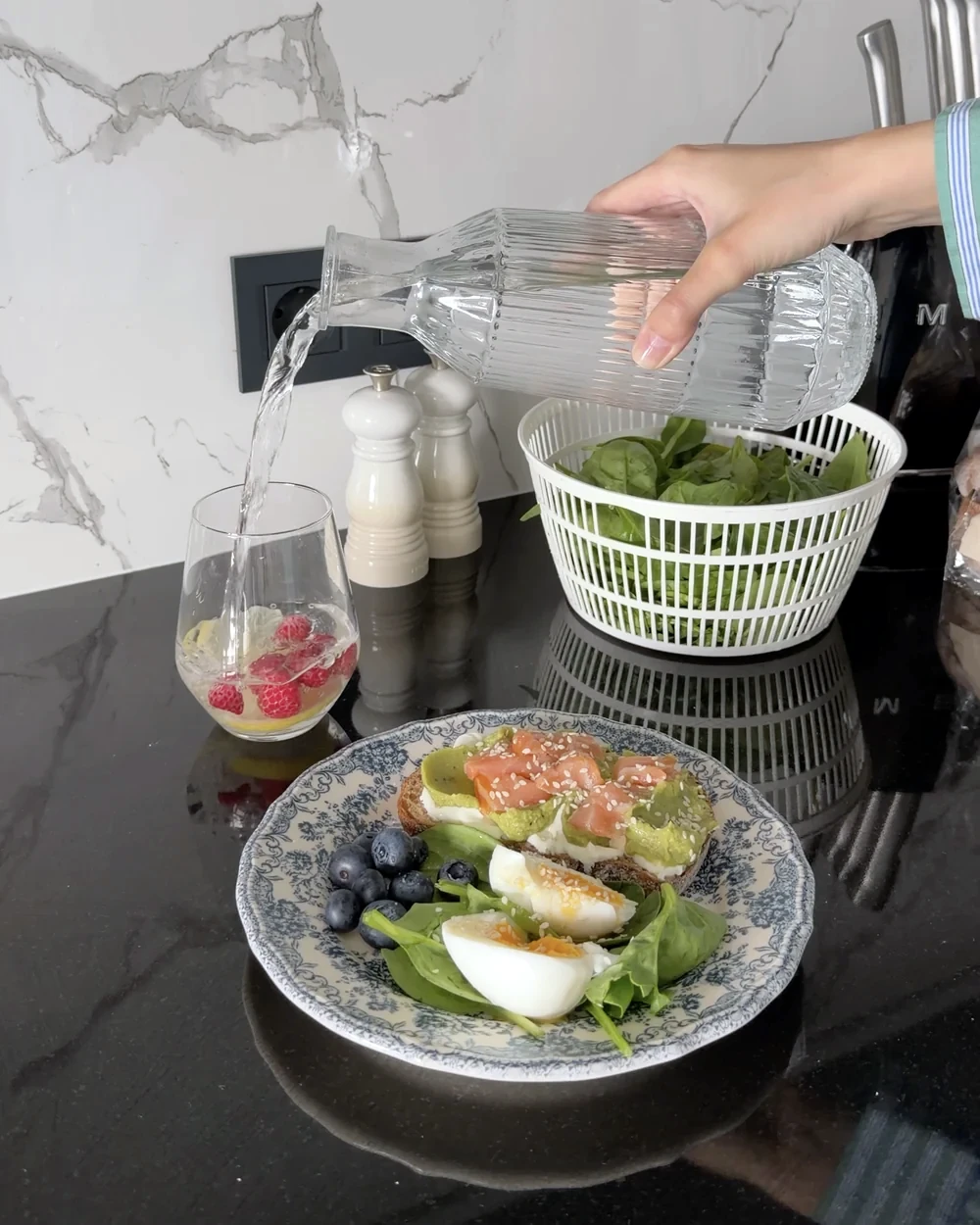
- Frozen counts. Frozen berries and vegetables are picked ripe and are a good, cheap option.
- Add fat to carotenoids. Cook tomatoes and carrots with olive oil, since carotenoids are fat-soluble.
- Eat a colour a day. Orange, red, green and purple foods bring different compounds.
- Buy what you will actually eat. A basket you finish beats a perfect one that spoils.
My grocery list
- Baby spinach or other leafy greens
- Carrots and sweet potatoes
- Tomatoes, to cook with olive oil
- Blueberries and other dark berries, pomegranate when in season
- Matcha or green tea
- Pumpkin seeds, walnuts and flaxseeds
- Kiwi, red bell peppers, lemons and limes
- Broccoli, sprouts, cauliflower, garlic and onions
Glow from within is built in the grocery aisle, one basket at a time.
If you have allergies, take medication or have a medical condition, please check with your doctor or a registered dietitian before changing your diet, especially with large amounts of green tea, matcha or supplements. Grapefruit, for example, can interact with some medications. I am not a medical professional.
Best foods for skin: common questions
What are the best foods for skin?
I look for variety rather than one superfood: leafy greens, orange vegetables, cooked tomatoes, berries, nuts and seeds, vitamin C fruit and vegetables, and cruciferous vegetables, alongside enough protein and healthy fats.
What foods help with collagen?
Your body makes collagen from amino acids, and vitamin C is a required co-factor in that process, so I pair protein with vitamin C foods such as kiwi, red bell peppers and citrus. Dark berries are rich in antioxidants that help protect existing collagen. Eating collagen itself is not the only route, and evidence for collagen supplements is mixed.
Which foods are good for clear skin?
There is no guaranteed list. Zinc and magnesium (pumpkin seeds), omega-3s (walnuts, flaxseed, fish), green tea polyphenols and fibre-rich vegetables are all part of my routine, and a lower glycemic load may help acne-prone skin. See also my note on hidden skin triggers.
Is kiwi better than orange for vitamin C?
Per 100 g, kiwi contains roughly 90 mg of vitamin C against about 50 mg in an orange, and red bell pepper roughly 130 mg. A whole orange is still a great source, and adult women need 75 mg a day according to the US National Institutes of Health, so both fit easily.
Is matcha good for skin?
Matcha is rich in EGCG, a polyphenol studied for calming and oil-regulating effects, mostly in small trials. It contains caffeine, so I would keep it to a cup or two and not late in the evening. Tea can reduce iron absorption, so drink it between meals if your iron is low.
Do carrots and sweet potatoes really help skin?
They provide beta-carotene, which the body converts into vitamin A, and vitamin A supports skin renewal. Very high beta-carotene intake can turn skin slightly orange, which is harmless and fades, but high-dose beta-carotene supplements are not recommended for smokers.
Can food replace sunscreen?
No. Carotenoids and antioxidants from food may add a small amount of protection over time, but they do not replace SPF.
Continue the series
Part 1: the gut-skin axis, part 2: food and supplements, part 3: hidden skin triggers and part 4: my daily gut health checklist.

Hi, I’m Anna. I share honest skincare reviews, simple routines and gut-friendly habits from my own life, on Instagram, on YouTube and here. I am not a doctor or a dietitian: I read the research and official sources, link them at the end of each note, and keep my claims careful. More about me and how I write these notes.
Want more notes like this?
One honest recommendation in your inbox every Sunday: skin tips, simple food ideas and the picks I actually use.
No spam, unsubscribe any time.Sources
- Vitamin C fact sheet for consumers, NIH Office of Dietary Supplements (75 mg for adult women, role in collagen, 2,000 mg upper limit).
- Vitamin A fact sheet for consumers, NIH Office of Dietary Supplements (700 mcg RAE, beta-carotene notes).
- Zinc fact sheet for consumers, NIH Office of Dietary Supplements.
- Magnesium fact sheet for consumers, NIH Office of Dietary Supplements.
- FoodData Central, USDA (vitamin C content of foods; values are approximate and vary by variety).
- The roles of vitamin C in skin health, review, Nutrients (2017).
- β-Carotene and other carotenoids in protection from sunlight, Photochemical & Photobiological Sciences.
- Induction of the phase 2 response in mouse and human skin by sulforaphane-containing broccoli sprout extracts, PubMed.
- The gut-skin axis: emerging insights in understanding and treating skin diseases through gut microbiome modulation, review, PMC.
Keep reading

Gut health and skin, part 1
How gut health can show up on your skin, what the research really says and what I would do first.
- Research
- Sources
Foods for glowing skin, part 2
The foods I come back to, how I think about magnesium, omega-3s, zinc and probiotics, and real daily limits.
- Research
- Sources

Gut health checklist, part 4
Small daily habits for better digestion and glowing skin: protein, plants, a walk after meals, sleep and calm.
- Research
- Sources
Tell me what your skin feels like, and I will show you what to look for and what to skip.
Open the skin guide